10 Years of EMDR Essentials and Beyond

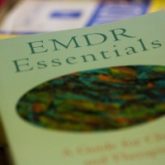
It’s been 10 years since I wrote EMDR Essentials: A Guide for Clients and Therapists, and I can hardly believe what has happened since then. I wrote this book because I kept hearing from therapists that they didn’t know how to explain EMDR therapy to their clients and felt there wasn’t anything good that they could give to clients to help them understand this powerful modality. I resisted writing this book wondering if I had anything to say, but something inside me said you just have to do it. What a learning process that was for me. But the thing that touched me the most is that when I approached my clients to share their stories for the book, they gladly offered their experiences to share so that others could relate to what they experienced and how they got help and felt real change.

Continue reading

Working with Attachment Trauma and EMDR Therapy

"Boy, Toddler, Ceo, Child, Kid, Cute, Happy, Baby" by Courtany via Pixabay (CC)

When therapists are first learning EMDR Therapy, they quickly realize that single incident traumas easily reprocess, and more complex cases do not respond using the standard protocol without learning more skills to recognize the underlying Attachment trauma. In order to successfully navigate Attachment Trauma, EMDR Therapists need to learn how…

Continue reading

Self-Care Books for Therapists

Melchers_Gari_Woman_Reading_By_A_Window

Therapists and counselors often ask their clients how they are taking care of themselves. It’s an important part of therapy. The big question is — How are therapists taking care of themselves? Are they doing for themselves what they expect their clients to do? Many therapists often put themselves last…

Continue reading

Why Therapists Need to Develop a Self-Care Plan

"Compassionate hands: taking care of our heart" by Enver Rahmanov via Wikimedia Commons (CC)

Psychotherapists and counselors are in the field of helping people: they are people who want to make a difference in the world. They give and give and give. What seems to be a common theme for many psychotherapists is that they often forget to give to themselves. They are easily…

Continue reading

Books on Working with Somatic Interventions and EMDR Therapy

1503 Connections of the Parasympathetic Nervous System

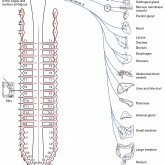
Many EMDR Therapists receive training in body-centered ways of working with trauma to learn how to see trauma in the body and have interventions that will help the client move through and integrate the trauma more completely. If you are an EMDR Therapist interested reading more about how trauma impacts the…

Continue reading

Proxemics and Nonverbal Communication in EMDR Therapy

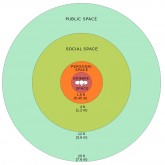
Diagram representation of personal space limits. Inspired by Reaction-bubble.png by Libb Thims (WikiCommons - CC0)

In the field of somatic psychology, nonverbal communication is a key element. Nonverbal communication is the ability to read and understand people’s nonverbal signals. Have you heard the phrase “actions speak louder then words”? Well, it’s true! 60 – 70% of our communication is nonverbal while only 30 – 40…

Continue reading

Books on How to Work with Addictions and EMDR Therapy

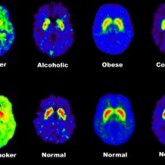
"PET_-_Human_Addiction" by Nora Volkow via Wikipedia (CC- CreativeCommons)

Therapists interested in learning more about working with addictions through the lens of trauma, and  how to stabilize clients using EMDR Therapy to give clients ease in their body and mind might be interested in the following sample of the books that Barb Maiberger and John Gray recommend in their EMDR Advanced…

Continue reading

Addictions, Trauma, and EMDR Therapy

The word “addiction” is a loaded word. Many people struggle with addiction on some level. It’s often hard to see or admit to oneself. Addiction can be complex in that it impacts people biologically, chemically, neurologically, psychologically, medically, emotionally, socially, and spiritually. What is in common with all addictions is the feeling…

Continue reading